
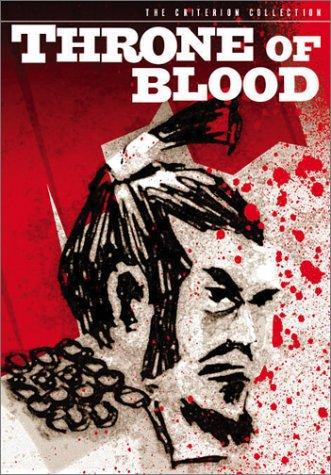
Akira Kurosawa’s take on Macbeth, Throne of Blood, is a unique one, but many of the elements that make it unique, hinder it as an adaptation. Kurosawa alters the story at points, perhaps because he thought certain elements wouldn’t translate to the screen, or because he wanted to shorten the plot to make room for more dialogue. Whatever his motivation, the changes are sorely missed. Most of his subtractions from the story are scenes and plot lines that add more depth to non-Macbeth characters, making the inclusion of anyone who isn’t the protagonist only useful in pushing his arc forward. The actors playing these secondary and tertiary characters are not given much to work with and do not offer much in return. This, however, is made up for in the spellbinding performance of Toshirō Mifune, whose wide-eyed expressions and exaggerated physicality exude a formidable power, and lends his journey a certain drama that its direction does not always provide.
While it isn’t always appropriate for the emotional spectacle that is the play, Kurosawa’s simplistic camerawork shines in Throne of Blood, allowing for the expansive sets and intricate costumes to immerse the viewer in a different world. His masterful use of light and color in greyscale, on the other hand, is quite histrionic enough to match the text. As always, Kurosawa finds the most structure and power in his blocking, and with countless warrior extras, Throne of Blood is tailored to portray this talent. The placement of both friends and foes throughout the screen, in oscillating relation to Macbeth and to the camera, adds a tension that is rare when the beats of the story are familiar. Conversely, Kurosawa lets many set pieces drag on past the point of suspense and into the realm of boredom, seeming to get lost in the beauty of the image and to forget that each shot is a part of a story. As a result, Shakespeare’s immaculate pacing is hindered by purely ornamental visuals that overstay their welcome. As a frame of reference, the new Coen brothers’ The Tragedy of Macbeth includes nearly every character and plotline from the original text, and is still shorter than Throne of Blood.
A few questionable editing choices were made with Shakespeare’s story. Many scenes are cut short, and transitions between plot points are often rushed with a wipe or a fade. The main element of any telling of Macbeth is the slow burn of Macbeth’s character, slowly gaining power and abandoning morality. The soul of the story exists within this change, and themes of ethical limitations and ambition rely on the audience identifying with the character until they decide his actions have become too immoral to justify. Throne of Blood takes this change in stages rather than in steady escalation, transitioning between Macbeth’s levels of morality at important points in the story. The plot and themes lose sight of the character, and he feels disjointed, existing only in his frayed and unprompted actions.
His flairs pleasantly subtle, Kurosawa helms Macbeth with a hand not so firm as with his later adaptations of Hamlet (The Bad Sleep Well) and King Lear (Ran). Had he committed to either Shakespeare’s style or his own, this may have been another masterwork – there are hints of something grim and haunting in this telling of the moral tale, but nothing forms.
 Jaxon Safian's Film Reviews