
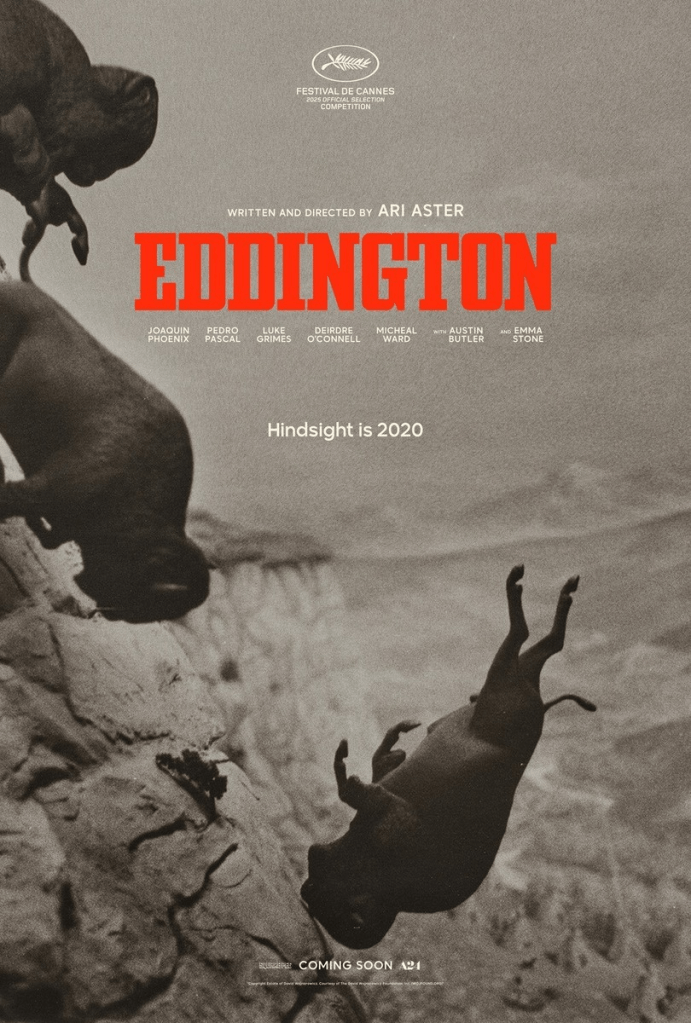
Ari Aster is most talented at transposing the emotions associated with real-life experiences to a film about those experiences constructed of heightened elements which would, under any other storyteller, detract from the effectiveness of the emotions inspired. He is able to blend an incredible array of genres here, including comedy and action (he can direct one hell of an action setpiece), but somehow nothing manages to undercut the connection we have to the characters; and his narrative expressionism, which takes the story to some wacky and often unrealistic places, somehow never makes the experience feel less accurate as a spiritual recreation of the times we live in. Francis Ford Coppola famously said Apocalypse Now “is not about Vietnam, it is Vietnam” – if so, Eddington is today’s America. Every element of the film is directed at immersing the viewer in the emotional isolation of its characters, each person’s unshakeable belief that they and only they see what’s really going on, that they and only they are truly decent; the sound design is particularly effective at illustrating the characters’ frame of mind, it carries the film’s emotional weight, it creates incredible suspense, most importantly it knows when to be silent and allow images to speak. I love the Western score (and how sparingly it’s used), adding effect to protagonist Sheriff Joe Cross’ romantic, self-justifying perspective of himself, like heroic Ride of the Valkyries playing from attack helicopters dropping bombs on villagers in Apocalypse Now.
Joaquin Phoenix is one of the most talented actors working today, and he does some of his very best work here as Sheriff Joe Cross. I fell in love with his character almost immediately as a reflection of the flawed but well-intentioned American Everyman, and his descent was riveting and cathartic – somewhere along the way you realize you are watching a concept of the American people collapse. Joe Cross is among my favorite anti-heroic protagonists, yesterday’s ever-decaying masculinity personified, insecure and unable to assert his ego in a changing world. Throughout the film, the constant element of suspense is the possibility that the character we are emotionally invested in will be motivated by ego to do something unforgivable – and once he does cross a line, it becomes the suspense of just how far he will go. This tone shift, concerning Joe’s character, is absolutely sobering even on rewatch. You can feel everyone in the theatre lock into the ride, it’s a fantastic communal emotional experience. We are watching, as perhaps we did five years ago, the American Everyman cross the point of no return. In the form of a Western hero, Joe’s ego is based on the perceived strength of his character as well as his dignity – when, in the final act, his aforementioned romantic, self-justifying perspective overtakes the story, he offers himself purification for his wrongdoing and shame through violence. Even as a satirical action hero, Joe is badass in Aster’s exhilarating first-ever action setpiece. (It feels to me like a variation on the end of Barry’s lead character arc – Bill Hader stars in Aster’s next film.)
Eddington is a departure for Aster in that all his previous films revolved around characters and events totally under the control of external forces – in the town of Eddington, nobody is in control, whether of themselves or of the world around them. There are myriad conflicts brewing between the townspeople, all motivated entirely by personal pride. The influence of pride is obvious in Phoenix’s pathetic Sheriff Cross, who refuses to wear a mask as a part of a feud with his neighbor/mayor; in the town’s ‘activists’, who act out of social self-promotion as much as anger (it’s often unclear what is being protested); even in the conspiracy theorists, who absolve themselves as helpless victims of a greater struggle. Everywhere the light of a screen touches, we see the political bleeding into the personal and vice versa, and we watch people support and tout political agendas as a means of comforting themselves and their egos. This is a dense narrative juggling many characters and themes, yet it always flows naturally and carries an even vision throughout.
This film inherits the anxious-awkward-absurdist humor of Aster’s previous Beau Is Afraid, but with an added layer of biting prescience. For the first time in years, a big movie feels politically dangerous – and I believe this feeling of danger, the striking power of having something new to say, discredits the charges against Aster of being a provocateur. The ending, which follows the paranoid logic of the townspeople to various implausible conclusions, is the only section of the film I would describe as provocative – or, in search of reaction – and is Aster’s most potent use of narrative expressionism yet. He makes us sit in this fantastical, terrible reality, with good vs evil shootouts and false flag attacks and child-hunting cults, that is the American experience for some. And is it all really so fantastical? We’ve woken up paralyzed, and it seems that anything could be about to happen.
 Jaxon Safian's Film Reviews